The short answer
Tires grip the road. Brakes reduce motion. Steering points the wheels. Suspension supports the car and helps the tires follow uneven ground.
Brakes turn motion into heat
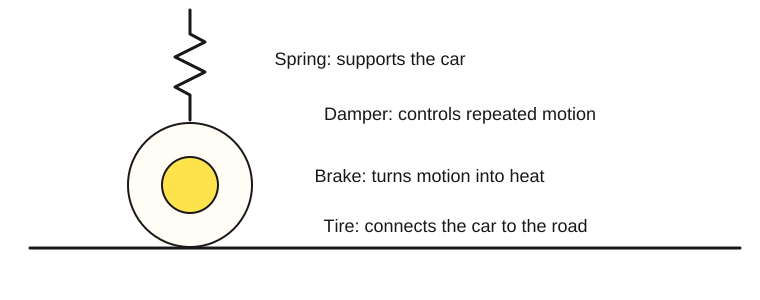
In a disc brake, brake pads squeeze a disc that turns with the wheel. Friction converts motion into heat. Brake fluid transmits pressure through a hydraulic system. Correct fluid and healthy components matter because heat and fluid problems can reduce braking performance.
Regenerative braking in an electric or hybrid car uses a motor as a generator to recover some energy. Friction brakes are still needed; regenerative braking is not a reason to skip brake inspections.
Sources: Brembo Parts ↗ · Brembo ↗ · U.S. Department of Energy ↗
Tires make the connection
Braking and steering depend on contact between tires and road. Inspect tread, visible damage, and uneven wear. Check cold tire pressure against the vehicle’s label or owner’s manual. The pressure molded on the tire is not generally the car’s recommended operating pressure.
Tires also age. A tire with remaining tread may still need assessment or replacement. Follow the vehicle and tire manufacturers’ guidance; visual inspection alone cannot establish its remaining life.
Steering and suspension manage that contact
A common steering design converts steering-wheel rotation into sideways movement of a rack, which turns the front wheels through links. Electric assistance can reduce the driver’s effort. This describes a common system, not every vehicle.
Suspension springs support the vehicle and allow wheel movement over bumps. Dampers, often called shock absorbers, restrain repeated bouncing. A damper’s job differs from a spring’s job. Both influence how the wheel follows the road.
Sources: Bosch Automotive Aftermarket ↗ · KYB Americas ↗
Common misunderstandings
Large wheels do not guarantee better grip. Tire design, condition, and fit matter.
A comfortable ride does not prove the suspension is healthy. An inspection can reveal wear that a short drive misses.
Sources & review
Reviewed . Original educational explanation, checked against the sources below. This is general guidance; consult the documents for the exact vehicle, year, configuration, and market.
- What causes brake discs to overheat and how to avoid itBrembo Parts · Friction, heat, and brake performance · Accessed 2026-10-22.
- Brake Fluid solutions for carBrembo · FAQs: Are brake fluids interchangeable? What is vapour lock? · Accessed 2026-10-22.
- How Do Hybrid Electric Cars Work?U.S. Department of Energy · Alternative Fuels Data Center · Introduction, Electric generator, and Transmission · Accessed 2026-10-22.
- Tire Safety Ratings and Awareness · TireWiseNational Highway Traffic Safety Administration · Tire Maintenance; Tire Pressure; Aging · Accessed 2026-10-22.
- Electric steering systemsBosch Automotive Aftermarket · Page 1: electric motor assistance to rack-and-pinion steering · Accessed 2026-10-22.
- How shocks workKYB Americas · Here are the basics; shock absorbers and hydraulic damping · Accessed 2026-10-22.