The short answer
Driver-assistance systems can warn you, intervene briefly, or help control speed or steering in specified conditions. Their names do not establish identical capabilities. Read the exact function, operating limits, and driver responsibilities for the car you are considering.
Ask whether it warns or acts
A forward collision warning alerts the driver to a detected collision risk. The warning itself does not apply the brakes. Automatic emergency braking, or AEB, can apply or supplement braking when its controls detect an imminent collision. The difference matters when interpreting a feature list.
The same distinction appears elsewhere. A blind-spot warning alerts you to a detected vehicle. A separate intervention function may brake or steer in certain circumstances. A lane-departure warning alerts you to drifting; lane-centering assistance provides continuing steering help. Do not infer an intervention from a warning feature’s name.
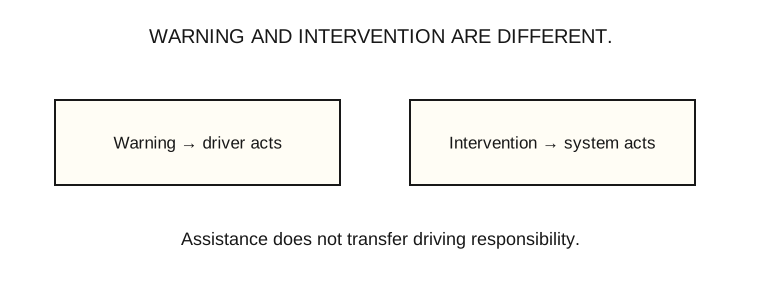
Assistance leaves an active job for the driver
Adaptive cruise control, abbreviated ACC, adjusts speed to help maintain a selected following gap from a detected vehicle ahead. Lane assistance can address steering. A system that combines speed and steering assistance may still require the driver to supervise continuously and intervene immediately when needed.
For Level 1 and Level 2 driver assistance, the driver remains responsible for driving and monitoring. Do not infer autonomous operation from a brand name or from seeing the car steer during a demonstration. Read what the exact system requires, when it can operate, and how it indicates that assistance has ended.
Common misunderstandings
A backup camera does not replace looking and using mirrors. It provides one view of the surroundings, not a guarantee that the path is clear.
An assistance system being available does not mean that it will prevent every collision. Detection and intervention have limits. Keep observing the road and leave an appropriate margin for the actual conditions, even when a function is engaged.
Sources & review
Reviewed . Original educational explanation, checked against the sources below. This is general guidance; consult the documents for the exact vehicle, year, configuration, and market.
- Driver Assistance TechnologiesNational Highway Traffic Safety Administration · Tech Overview; Collision Warning; Collision Intervention; Driving Control Assistance · Accessed 2026-10-22.
- Buying a Used Car From a DealerFederal Trade Commission · Do Some Homework; Get an Independent Inspection Before You Buy; The Buyers Guide · Accessed 2026-10-22.