The short answer
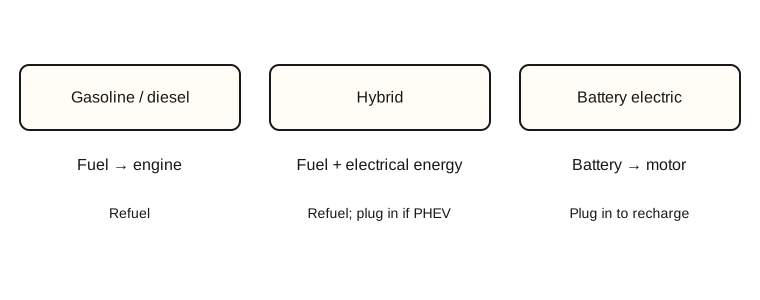
Gasoline and diesel cars burn fuel. Hybrids combine an engine with electric drive. Battery electric cars drive using electricity stored in a rechargeable battery.
Gasoline and diesel
Both use internal combustion engines. Gasoline engines generally start combustion with a spark. Diesel engines compress air until it is hot enough to ignite injected fuel. They use different fuel and often different exhaust-treatment equipment.
The label alone does not settle fuel cost, noise, reliability, or environmental impact. Those depend on the vehicle, how it is used, the energy supply, and local conditions. Compare the exact versions.
Sources: U.S. Department of Energy ↗ · U.S. Department of Energy ↗
Two kinds of hybrid
A conventional hybrid combines an engine, electric motor or motors, and a battery. It recovers some braking energy and can use engine power to replenish the battery. It does not need an external plug. The engine and motor arrangement varies.
A plug-in hybrid has a battery that can also charge from an external electricity supply. Its useful electric driving depends on the model, charge level, temperature, and conditions. The engine may run even with charge available. Charging regularly is part of making use of its electric capability.
Sources: U.S. Department of Energy ↗ · U.S. Department of Energy ↗
Battery electric
A battery electric vehicle has an electric traction motor in place of a combustion engine. You recharge its traction battery using external electricity. It produces no tailpipe exhaust, but that is not the same as having no environmental impact over its whole life.
Electric cars typically need fewer routine engine-related services because they have no combustion engine oil to change. They still need tires, brakes, and other model-specific checks.
Sources: U.S. Department of Energy ↗ · U.S. Department of Energy ↗
Common misunderstandings
A conventional hybrid cannot be charged by connecting it to a wall outlet. A plug-in hybrid can.
A battery electric car is not maintenance-free, and a plug-in hybrid still has an engine to maintain.
Sources: U.S. Department of Energy ↗ · U.S. Department of Energy ↗ · U.S. Department of Energy ↗
Sources & review
Reviewed . Original educational explanation, checked against the sources below. This is general guidance; consult the documents for the exact vehicle, year, configuration, and market.
- How Do Gasoline Cars Work?U.S. Department of Energy · Alternative Fuels Data Center · Introduction and Key Components of a Gasoline Car · Accessed 2026-10-22.
- How Do Diesel Vehicles Work?U.S. Department of Energy · Alternative Fuels Data Center · Introduction and Key Components of a Light-Duty Diesel Vehicle · Accessed 2026-10-22.
- How Do Hybrid Electric Cars Work?U.S. Department of Energy · Alternative Fuels Data Center · Introduction, Electric generator, and Transmission · Accessed 2026-10-22.
- How Do Plug-In Hybrid Electric Cars Work?U.S. Department of Energy · Alternative Fuels Data Center · Introduction and Charge port · Accessed 2026-10-22.
- How Do All-Electric Cars Work?U.S. Department of Energy · Alternative Fuels Data Center · Introduction and Key Components of an All-Electric Car · Accessed 2026-10-22.
- Maintenance and Safety of Electric VehiclesU.S. Department of Energy · Alternative Fuels Data Center · Maintenance Comparison and Battery Maintenance · Accessed 2026-10-22.