The short answer
A turbocharger uses exhaust gas to drive a compressor. The compressor packs more air into the engine so it can burn more fuel and produce more power.
Two wheels, one shaft
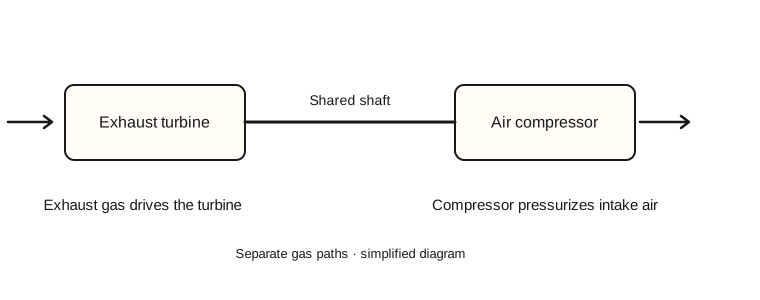
Exhaust leaving the engine spins a turbine wheel. A shaft links that wheel to a compressor on the intake side. The compressor raises the incoming air’s pressure. Exhaust gas and intake air travel through separate passages; they do not mix inside a normal turbocharger.
Compressing air also heats it. Many engines use a charge-air cooler, often called an intercooler, to cool the compressed air before it reaches the cylinders. The exact plumbing and controls vary.
Sources: Cummins ↗
Why use a smaller turbo engine?
Extra air allows the engine to add fuel and produce more power than it could with its unassisted air supply. This can let a manufacturer replace a larger engine with a smaller one while retaining useful performance.
The turbo does not deliver free energy. It extracts energy from the exhaust, and extra power still needs extra fuel. Actual fuel consumption depends on the engine, vehicle, and driving conditions. There is no single fuel saving that applies to every turbocharged car.
Sources: U.S. Department of Energy / U.S. Environmental Protection Agency ↗ · Cummins ↗
Common misunderstandings
A turbocharged 1.5-liter engine is still a 1.5-liter engine. The turbo changes the air supply, not the pistons’ swept volume.
“Turbo” is not a fuel type. Both gasoline and diesel engines can use turbochargers. Required fuel grade and servicing depend on the actual engine.
Sources: NASA Glenn Research Center ↗ · Cummins ↗
Sources & review
Reviewed . Original educational explanation, checked against the sources below. This is general guidance; consult the documents for the exact vehicle, year, configuration, and market.
- How a turbocharger worksCummins · Turbine and compressor operation · Accessed 2026-10-22.
- Advanced Engine TechnologiesU.S. Department of Energy / U.S. Environmental Protection Agency · FuelEconomy.gov · Turbocharging with Engine Downsizing; Gasoline Direct Injection · Accessed 2026-10-22.
- Bore and StrokeNASA Glenn Research Center · Bore, stroke, and total displacement definitions (final two technical paragraphs) · Accessed 2026-10-22.