Engines and power: make sense of car specifications
Understand cylinders, engine size, horsepower, torque, and turbochargers. Learn which questions to ask when comparing engine specifications.
Follow the reading pathSource-checked October 23, 2026. Editorial policy and review limits.
Give each number a job
Engine size describes a volume
A cylinder contains a moving piston. The volume swept by that piston between its two end positions contributes to engine displacement. Add the swept volumes of all the cylinders to get the total. For example, four cylinders that each sweep 0.5 liters give a total displacement of 2.0 liters.
This is a geometric measurement. Read it as the answer to a volume question. Then look at the other specifications to understand the engine’s output. The first two lessons below separate cylinder arrangement from displacement so that the words in a listing stop running together.
Sources: NASA Glenn Research Center
Power and torque answer different questions
Torque describes a turning effect produced by a force. Power measures how quickly work is done. Horsepower and watts are units of power. A listing can therefore give both a torque figure and a power figure without describing two separate supplies of energy.
Keep the units attached to every number you write down. Instead of asking which single figure makes an engine best, use the full explanation to understand the measurements. Then relate those measurements to the particular vehicle you want to investigate.
Sources: NASA Glenn Research Center · NASA Glenn Research Center
A turbocharger changes the air supply
A turbocharger compresses air going into the engine. The extra air allows more fuel to be burned, increasing the engine’s possible output. That is one reason two engines with the same displacement can have different power ratings.
Use this mechanism as a reason to keep reading a specification. The label “turbo” does not tell you the exact version, maintenance history, or condition of the car being advertised. Those are separate questions for its documentation and inspection.
Sources: U.S. Department of Energy / U.S. Environmental Protection Agency
Start here. Build one idea at a time.
Follow the physical parts first, then the measurements. Finish with the turbocharger so you can connect its purpose to the air and fuel entering the engine.
Cylinders, pistons, and the meaning of V6
Learn what a cylinder is and how cylinder arrangements get their names. This is the starting point for interpreting a label such as V6.
What does a 2.0-liter engine mean?
Connect cylinder size and piston travel to the total volume in liters. Keep engine size separate from fuel-tank size.
Horsepower and torque: two different measurements
Give power and torque their own meanings and units. Learn why comparing only peak numbers leaves questions unanswered.
What a turbocharger does
Follow the turbine and compressor through a simple diagram. See how the air supply connects engine design to its output.
Common misunderstandings
A 2.0-liter engine holds 2.0 liters of fuel
The figure describes total piston-swept volume. It does not state fuel-tank capacity or the amount of fuel used on a journey.
Explore this in the full explanation →
A turbocharger creates power without using more air or fuel
The compressor increases the air supplied to the engine. That makes it possible to burn more fuel. Read the full explanation before treating a turbo badge as a complete account of performance or economy.
All 13 explanations in this topic
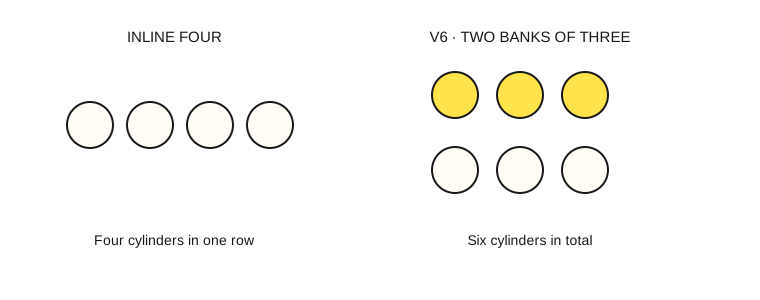
Cylinders, pistons, and the meaning of V6
Read engine layouts without needing to memorize a catalog of engine names.
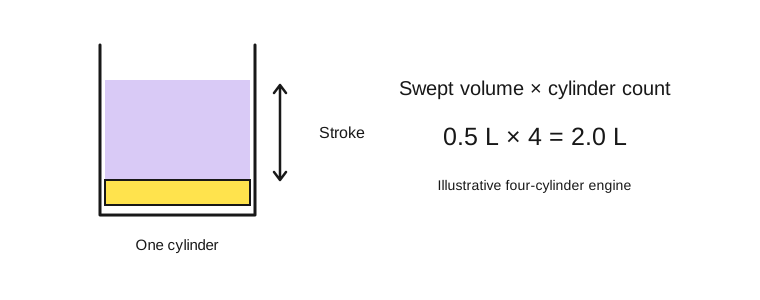
What does a 2.0-liter engine mean?
Liters describe a volume inside the engine. They do not tell the whole performance story.
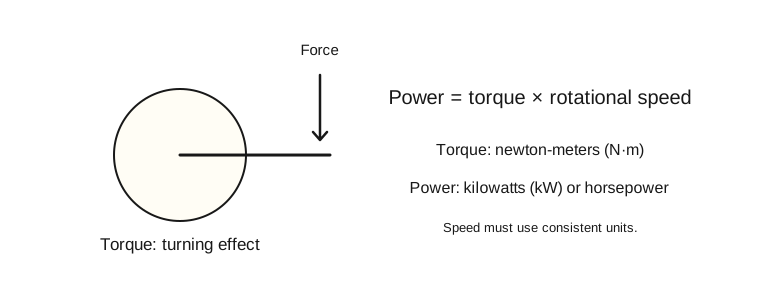
Horsepower and torque: two different measurements
Understand turning force, rate of work, and what a peak number leaves out.
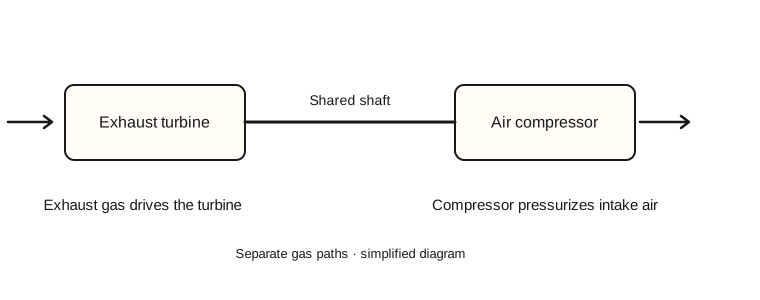
What a turbocharger does
Follow the exhaust-powered device that helps a smaller engine make more power.
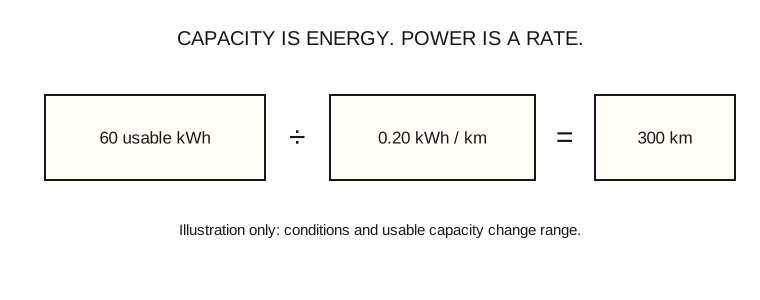
Battery capacity, charging power, and driving range
Tell energy storage apart from power, and understand why a range estimate can change.
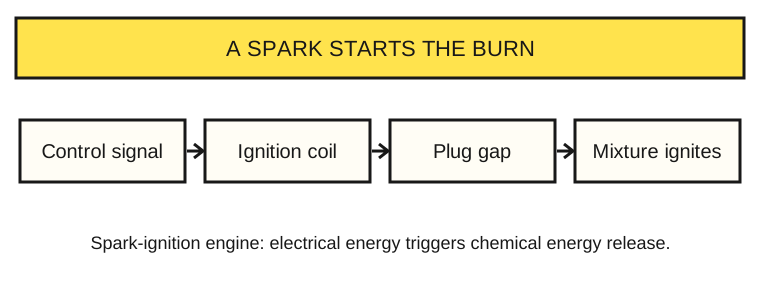
Spark plugs and ignition: starting the burn
See why a gasoline engine needs a timed spark and what a misfire can tell you.
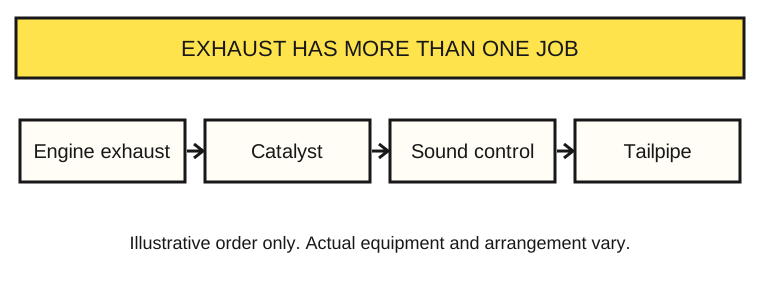
Exhaust systems: more than a pipe and a silencer
Separate gas flow, noise control, pollution treatment, and the checks a buyer should request.
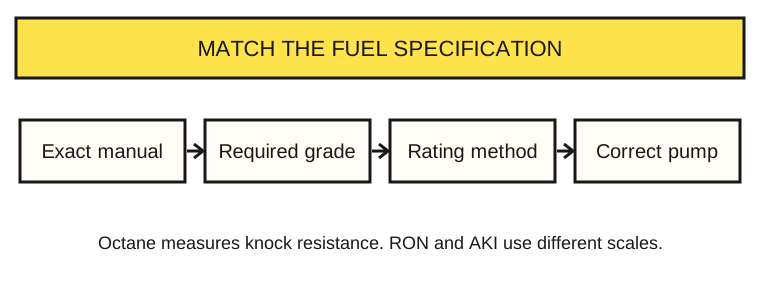
Octane: what regular and premium gasoline mean
Read the required gasoline grade correctly, including the different rating methods used on pump labels.
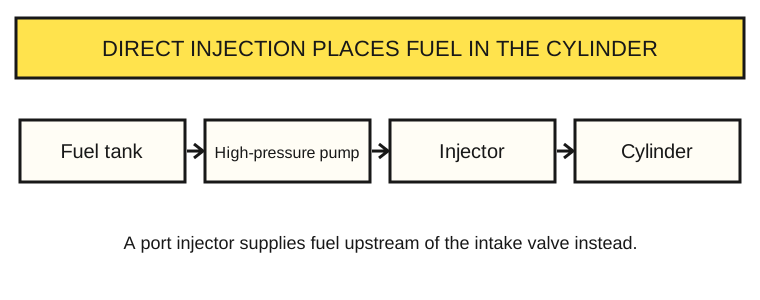
Direct and port fuel injection: where the gasoline enters
Follow the fuel to its injector and distinguish injection type from turbocharging or engine size.
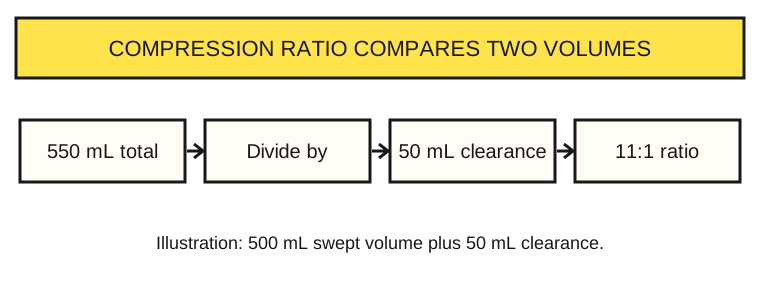
Compression ratio is different from engine size
Understand a ratio such as 11:1 without confusing it with displacement, boost, or a workshop compression test.
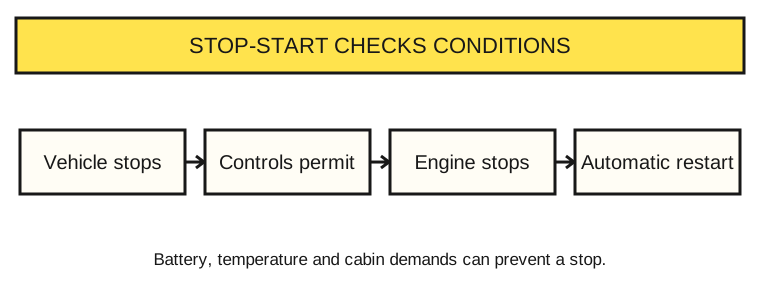
Why an engine can stop and restart automatically
Separate a normal automatic stop from a stall, and learn why operating conditions can keep the engine running.
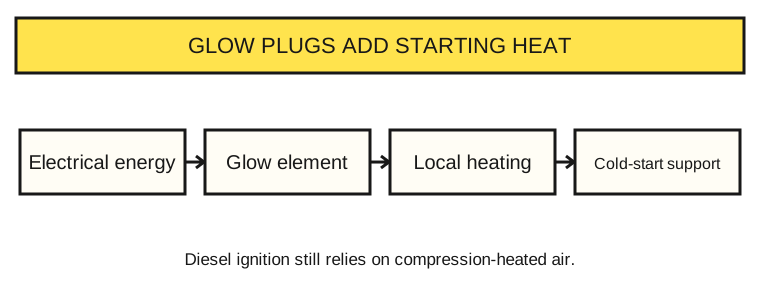
What glow plugs do when a diesel engine starts
Understand electrical starting heat without confusing a glow plug with a gasoline spark plug.
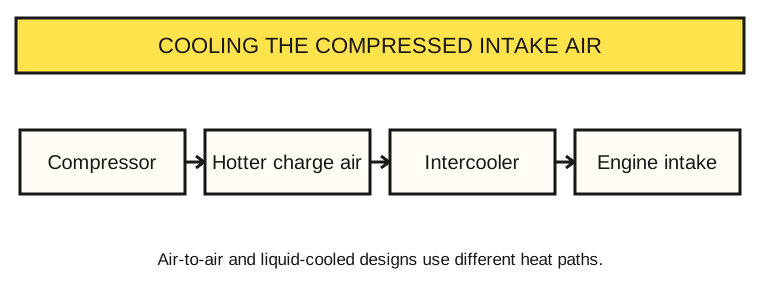
Why a turbocharged engine may need an intercooler
Follow compressed intake air through a heat exchanger before it reaches the engine.
Sources and review
Source-checked October 23, 2026. These original summaries use the references below. The linked articles explain each mechanism in more detail and carry their own supporting citations. Review means checking against cited evidence; it is not an independent professional inspection or engineering certification.
- Bore and Stroke
NASA Glenn Research Center · Bore, stroke, and total displacement definitions (final two technical paragraphs) · Accessed 2026-10-23. Use and rights record.
- Torque (Moment)
NASA Glenn Research Center · Definition of torque and perpendicular lever arm · Accessed 2026-10-23. Use and rights record.
- What is Power?
NASA Glenn Research Center · Definition of power and units · Accessed 2026-10-23. Use and rights record.
- Advanced Engine Technologies
U.S. Department of Energy / U.S. Environmental Protection Agency · FuelEconomy.gov · Turbocharging with Engine Downsizing; Gasoline Direct Injection · Accessed 2026-10-23. Use and rights record.
These are general measurement and mechanism principles. Confirm output, required fuel, engine equipment, and maintenance instructions for the exact model year and market. All prose and the diagrams in linked explanations are original.
Connect this topic to the next
Prefer one route through the whole site? Follow the complete beginner learning path.