The short answer
A plug-in hybrid electric vehicle, or PHEV, combines a combustion engine with electric propulsion and a battery that can charge from an external supply. It can cover some driving with electricity, then continue using fuel. Its usefulness depends on your charging opportunities, journeys, and the particular car’s operating rules.
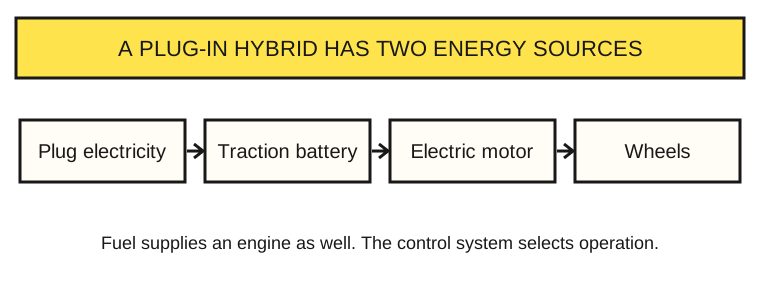
Two energy sources give the controls more choices
A conventional hybrid recovers energy and uses its engine without accepting routine external charging. A plug-in hybrid adds a charge port and usually more battery energy for electric driving. Its controls can use the motor, engine, or both according to the design and conditions.
Reaching the end of the displayed electric range does not usually mean the traction battery contains no energy at all. The car manages a reserve for hybrid operation. Think of the transition as a change in the operating strategy rather than a battery that suddenly becomes a useless empty box.
Sources: U.S. Department of Energy ↗ · U.S. Department of Energy ↗
Electric range does not promise engine silence
Some plug-in hybrids start the engine even when battery charge remains. Conditions can include high power demand, battery temperature, or a selected driving mode. BMW lists these examples for its vehicles; another manufacturer or model may set different rules. Check the specific manual before relying on all-electric operation.
A short trip within the advertised electric range is therefore not a guarantee of zero fuel use. Weather, speed, heating needs, and the operating conditions affect the outcome. Compare the car’s charge-depleting behavior and its fuel use after that phase. One combined headline figure cannot describe every possible mix of electric and fuel-powered distance.
Sources: BMW USA ↗ · U.S. Environmental Protection Agency ↗ · U.S. Department of Energy ↗
Common misunderstandings
A plug-in hybrid is not automatically the best match for a buyer who cannot charge. It may still operate as a hybrid, but the purchase and ownership comparison should reflect that use. Compare actual fuel consumption in the relevant mode and all other costs, rather than assuming frequent electric trips that cannot happen.
Electric range and fuel range are not interchangeable test results. Read the test method and conditions for each figure. Use an ownership estimate with visible assumptions for electricity, fuel, and your distance split; revise those assumptions when your charging routine or travel pattern changes.
Sources: U.S. Department of Energy ↗ · U.S. Environmental Protection Agency ↗ · U.S. Department of Energy ↗
Sources & review
Reviewed . Original educational explanation, checked against the sources below. This is general guidance; consult the documents for the exact vehicle, year, configuration, and market.
- How Do Plug-In Hybrid Electric Cars Work?U.S. Department of Energy · Alternative Fuels Data Center · Introduction and Charge port · Accessed 2026-10-22.
- How Do Hybrid Electric Cars Work?U.S. Department of Energy · Alternative Fuels Data Center · Introduction, Electric generator, and Transmission · Accessed 2026-10-22.
- Under what conditions does the combustion engine start automatically in BMW Plug-in Hybrid vehicle?BMW USA · Automatic engine-start conditions. Examples are explicitly manufacturer-specific. · Accessed 2026-10-22.
- Electric & Plug-In Hybrid Electric VehiclesU.S. Environmental Protection Agency · Driving Range · Accessed 2026-10-22.
- Electric Vehicle Charging StationsU.S. Department of Energy · Alternative Fuels Data Center · Charging Equipment: AC Level 1, AC Level 2, DC Fast Charging; charging-time variables · Accessed 2026-10-22.
- Maintenance and Safety of Electric VehiclesU.S. Department of Energy · Alternative Fuels Data Center · Maintenance Comparison and Battery Maintenance · Accessed 2026-10-22.
- Buying a Used Car From a DealerFederal Trade Commission · Do Some Homework; Get an Independent Inspection Before You Buy; The Buyers Guide · Accessed 2026-10-22.
- Vehicle Cost CalculatorU.S. Department of Energy · Alternative Fuels Data Center · Vehicle comparison inputs; cost assumptions and total ownership cost · Accessed 2026-10-22.