The short answer
Wheel alignment checks and adjusts wheel angles against the vehicle’s specification. Wheel balancing corrects uneven mass distribution in a rotating tire and wheel assembly. The two services address different problems. Pulling, vibration, or uneven tire wear are reasons to investigate, but none identifies one cause by itself.
Alignment describes where the wheels point and lean
Wheel geometry includes several angles. Toe describes whether the wheels point inward or outward when viewed from above. Camber describes their inward or outward lean when viewed from the front. Caster concerns the steering axis viewed from the side. The intended values depend on the vehicle.
Alignment involves the suspension and steering geometry rather than merely straightening the steering wheel. A technician measures the relevant angles and compares them with the correct specification. Worn or damaged components may need repair before adjustments can produce a lasting result. Not every angle is adjustable on every car.
Sources: Bridgestone Americas ↗
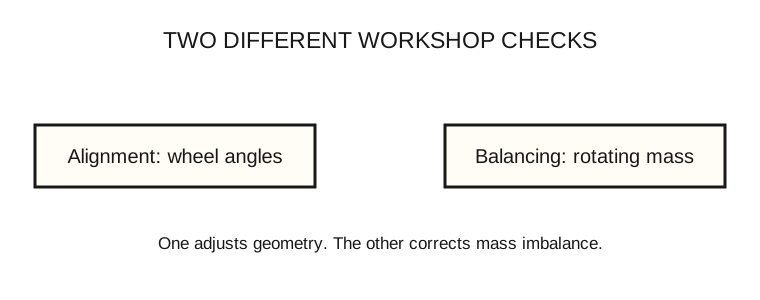
Balancing concerns the rotating assembly
A tire and wheel assembly can have uneven mass around or across it. As it rotates, this imbalance can produce forces felt as vibration. A balancing machine measures the imbalance, and the technician places correction weights in suitable positions.
Balancing cannot straighten a damaged wheel or repair every tire fault. Equally, adjusting alignment does not automatically correct mass imbalance. A vibration may require checks of the tire, wheel, suspension, or driveline. Describe where and when you feel it rather than buying a service based only on the symptom’s name.
Sources: Bridgestone Americas ↗ · National Highway Traffic Safety Administration ↗
Common misunderstandings
The tire pressure printed on a tire sidewall is not the vehicle’s recommended operating pressure. Use the vehicle placard or manual and its cold-pressure procedure. Correct pressure is part of a fair assessment, but it does not replace geometry or balance checks.
An alignment receipt is a record of work at a particular time. It is not proof that the car has never suffered damage or that its current suspension is sound. Follow vehicle-specific maintenance guidance and investigate new symptoms; do not apply one universal distance interval to every alignment or balancing job.
Sources: National Highway Traffic Safety Administration ↗ · Ford UK ↗ · Federal Trade Commission ↗
Sources & review
Reviewed . Original educational explanation, checked against the sources below. This is general guidance; consult the documents for the exact vehicle, year, configuration, and market.
- What You Need to Know About Tire AlignmentBridgestone Americas · What is tire alignment?; Camber, toe and caster; Tire balancing. Generic intervals and single-cause symptom diagnoses are not adopted. · Accessed 2026-10-22.
- Tire Safety Ratings and Awareness · TireWiseNational Highway Traffic Safety Administration · Tire Maintenance; Tire Pressure; Aging · Accessed 2026-10-22.
- Buying a Used Car From a DealerFederal Trade Commission · Do Some Homework; Get an Independent Inspection Before You Buy; The Buyers Guide · Accessed 2026-10-22.
- Service Intervals and Oil Change IntervalsFord UK · When should I get my car serviced?; variable oil service intervals · Accessed 2026-10-22.